


Marble flooring is prized for its timeless beauty, natural veining and luxurious appearance. Whether installed in a home, hotel, office or retail space, marble creates an elegant impression that few materials can match. However, even the highest-quality marble floors can gradually lose their shine over time. What was once a reflective, polished surface may begin to appear dull, scratched or uneven.
Understanding why marble loses its lustre can help property owners take the right steps to restore and protect their investment.
Daily Foot Traffic Creates Micro-Scratches
One of the most common causes of dull marble floors is everyday wear and tear. As people walk across the surface, tiny particles of dirt, dust and grit act like abrasives beneath footwear. Over time, these particles create microscopic scratches that gradually wear away the marble’s polished finish.
In high-traffic areas such as entrances, living rooms, hotel lobbies and commercial spaces, these scratches accumulate and reduce the floor’s ability to reflect light evenly, causing it to appear dull and tired.
Acidic Cleaners Can Damage Marble Surfaces
Marble is a natural stone that contains calcium carbonate, making it sensitive to acidic substances. Unfortunately, many household cleaning products contain acidic ingredients that can etch the surface of marble.
Even common substances such as vinegar, citrus-based cleaners and certain bathroom products can damage the stone’s finish. These chemical reactions leave behind dull patches and marks that cannot simply be wiped away.
Water Stains and Soap Residue Build Up
Over time, mineral deposits from water, soap residue and cleaning products can accumulate on marble surfaces. In bathrooms, kitchens and other wet areas, this build-up can create a cloudy appearance that hides the stone’s natural beauty.
Without proper marble maintenance, these deposits can become increasingly difficult to remove and may contribute to long-term surface deterioration.
Why DIY Marble Polishing Often Falls Short
Many DIY marble polishing products promise quick results, but most provide only a temporary cosmetic improvement. Surface coatings and polishing compounds may create a short-lived shine, but they do not address scratches, etching or uneven wear beneath the surface.
In some cases, improper DIY treatments can even make future marble floor restoration more challenging.
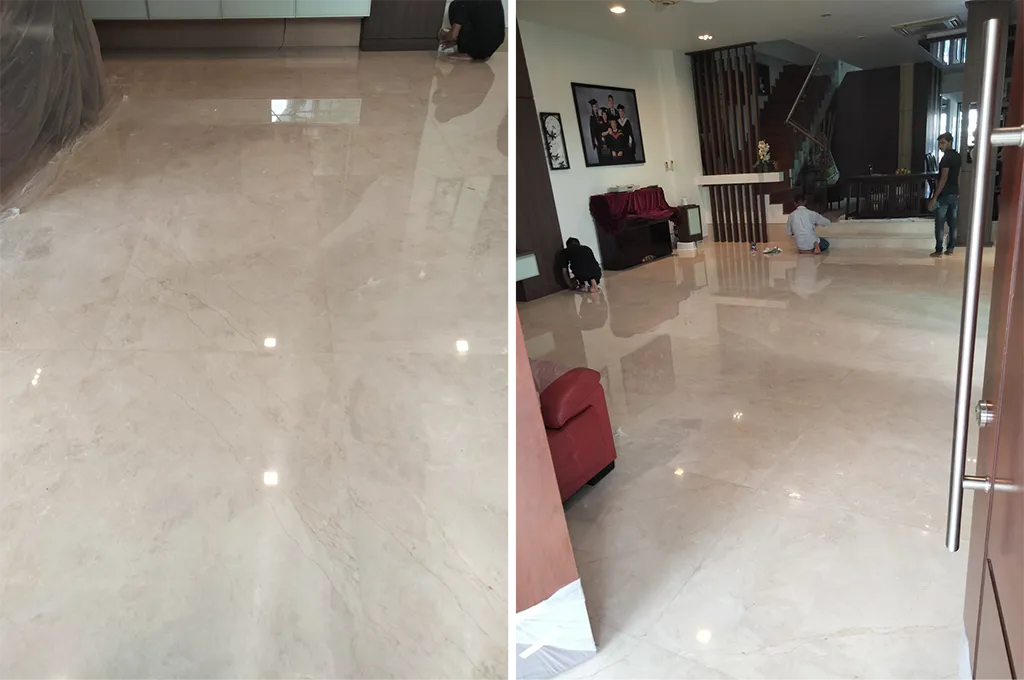
How Professional Marble Polishing Restores Natural Shine
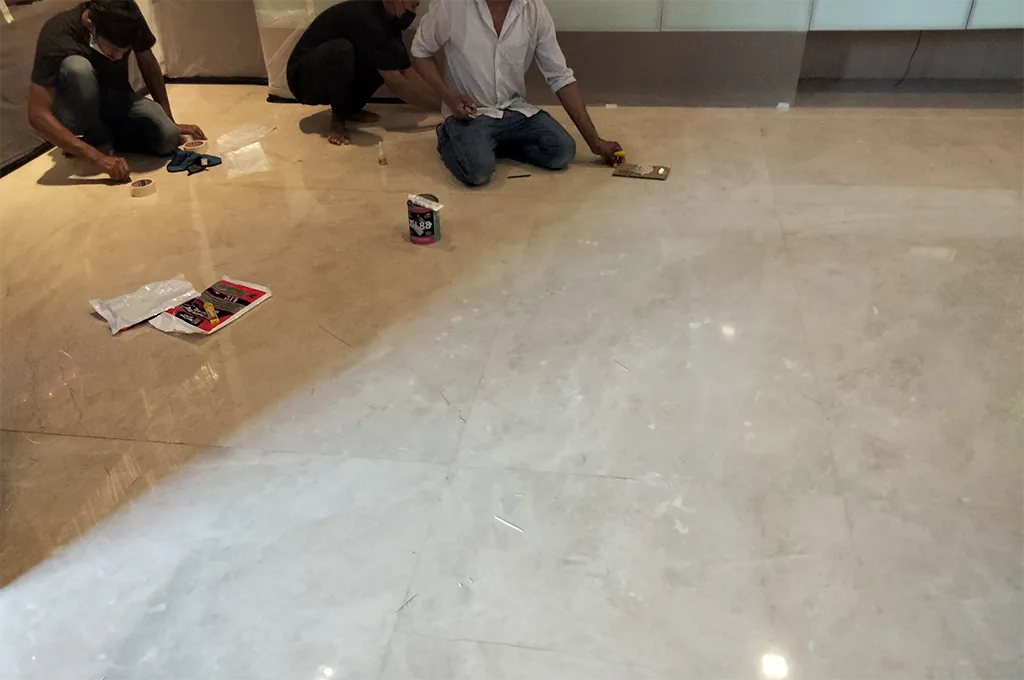
At Marble Renewal, we follow a systematic process of grinding, honing and polishing the stone using specialised diamond abrasives and restoration equipment.
During this process, surface scratches, etching and wear patterns are carefully removed, revealing fresh stone beneath. The marble is then polished to restore its natural clarity, depth and reflection. Unlike temporary surface treatments, professional marble floor polishing restores the stone itself rather than simply masking imperfections.
The result is a floor that looks revitalised while retaining the unique character and beauty of natural marble.
Protecting Marble with Professional Sealing
After polishing, a high-quality impregnating sealer can help reduce the risk of future staining by limiting the absorption of liquids into the stone. While sealing does not make marble stain-proof, it provides an important layer of protection that supports long-term marble care and maintenance.
With regular cleaning and periodic professional stone restoration, marble flooring can continue to look beautiful for decades.
Thinking of restoring your marble flooring instead of replacing it? Contact us for a site assessment and discover how professional marble polishing can bring your natural stone surfaces back to life.