

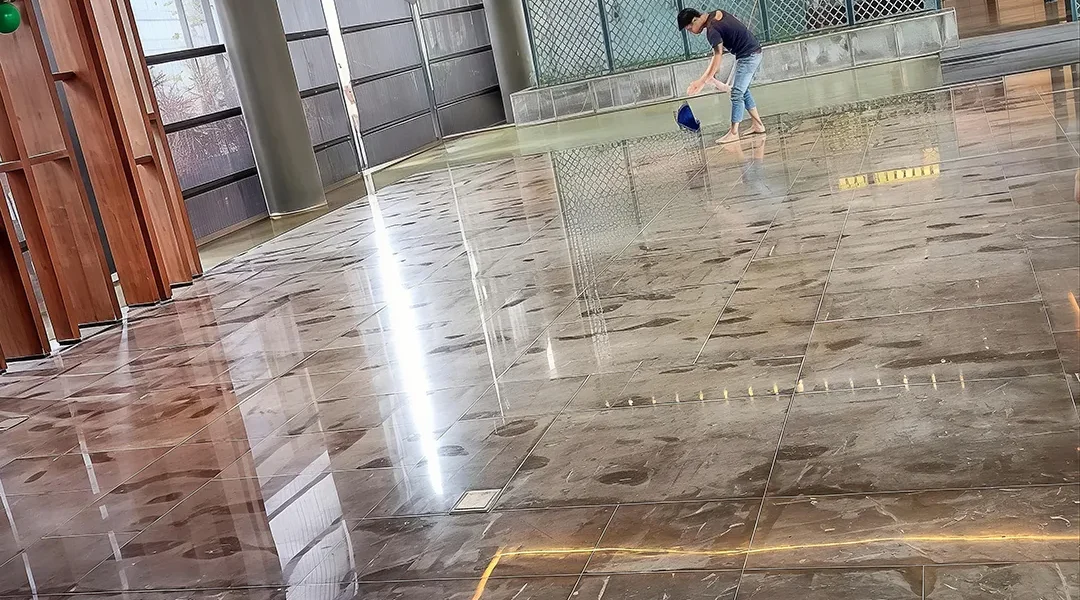
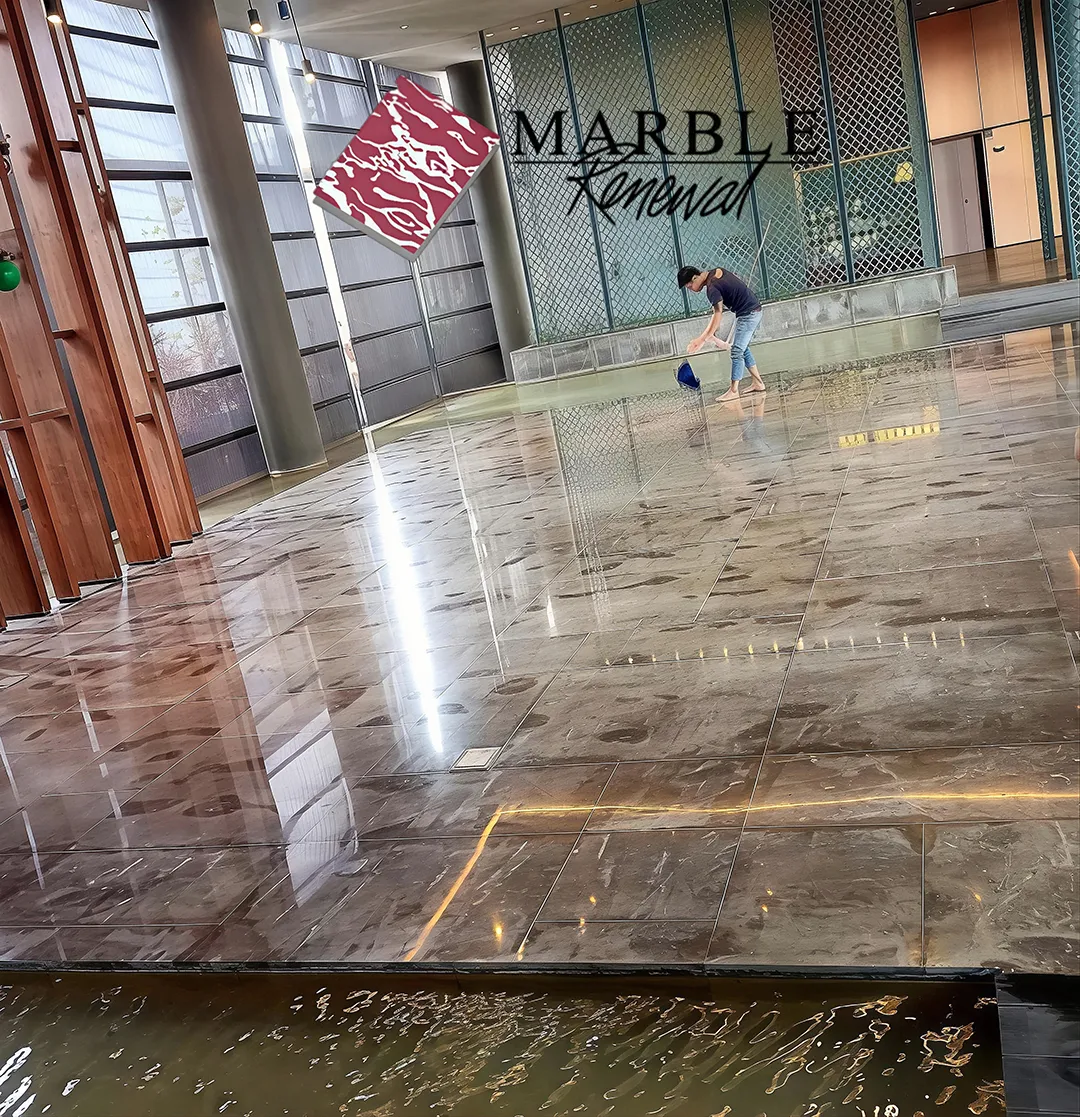
Marble floor polishing in a large commercial lobby environment.
Image for visual reference and may not represent the exact project.
Marble surfaces naturally lose their shine over time due to wear and daily use. While regular cleaning helps maintain hygiene, it does not restore the smoothness or reflective quality of the stone.
Marble polishing is a restorative process that brings surfaces back to a refined, consistent finish.
From large hotel lobbies to private residential living spaces, the polishing process requires both technical precision and skilled workmanship to achieve lasting results.
What Marble Polishing Actually Involves
Marble polishing is not simply about making a surface look shiny.
It is a controlled process that involves:
- surface preparation
- repair of imperfections
- progressive refinement using specialised equipment
The goal is to restore:
- surface smoothness
- natural clarity
- consistent reflection across the entire area
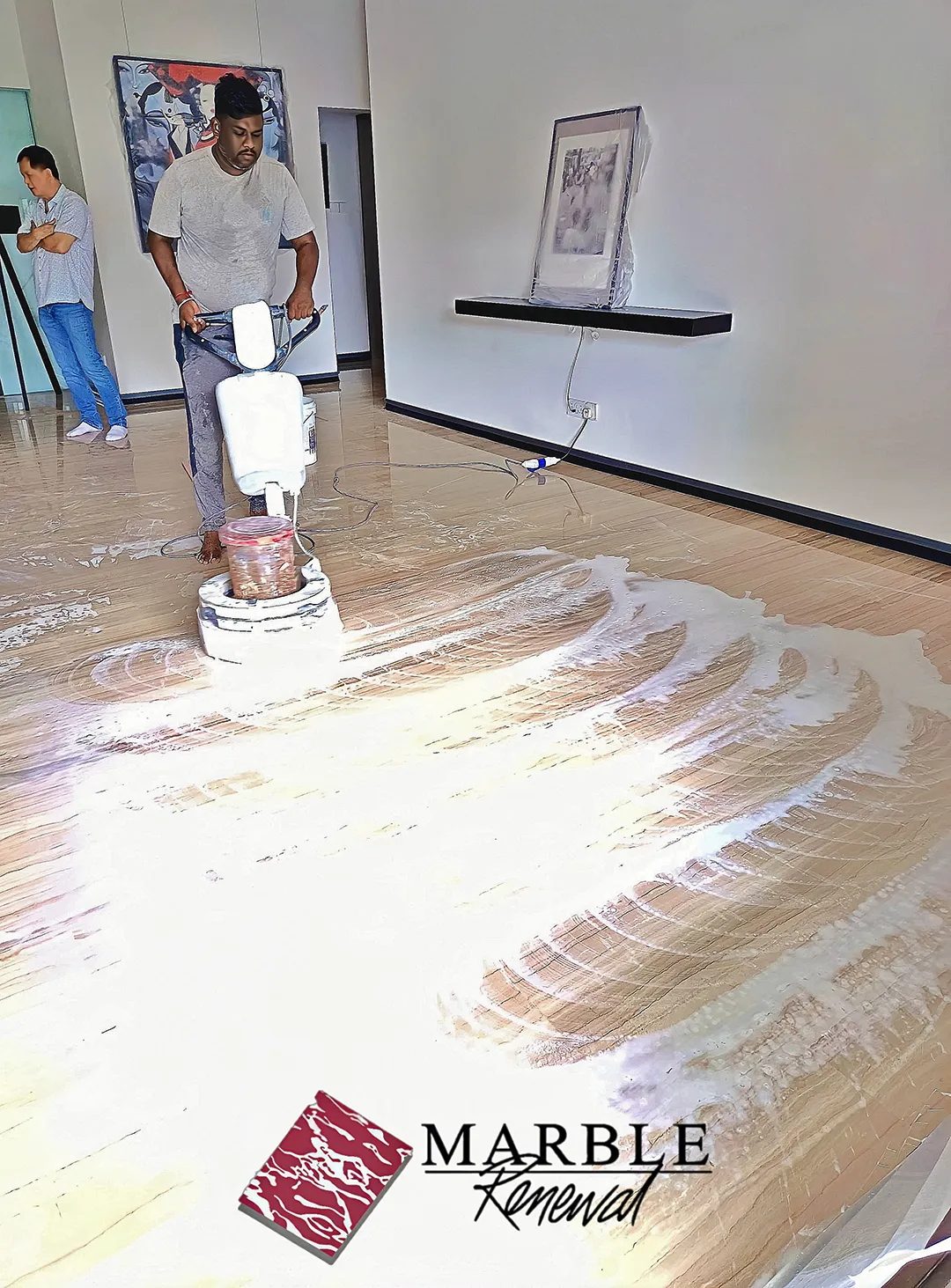
Marble polishing in progress using professional equipment to restore surface smoothness and clarity.
The Different Stages of Marble Polishing
A professional marble polishing process is carried out in stages, depending on the condition of the surface.
- Preparation
Before polishing begins:
- the area is cleared of furniture and obstacles
- adjacent surfaces are protected
This ensures a safe and controlled working environment.
- Surface Repair (Filling Stage)
Before refinement, visible defects are addressed.
This includes:
- repairing cracks and chipped areas using coloured epoxy
- filling worn-out joints and missing grout lines
- stabilising weak areas where necessary
👉 Proper surface repair is essential for achieving a smooth and consistent finish.
- Progressive Diamond Polishing
Polishing is carried out using a series of diamond pads.
- Coarse grits remove worn and scratched surfaces
- Medium grits refine the texture
- Fine grits enhance clarity and reflection
👉 This gradual progression restores the marble step by step.
- Edge & Detail Work
Edges, corners, and staircases are treated separately using handheld tools to ensure:
- consistent finish across all areas
- no uneven or dull sections
- Cleaning Between Stages
After each stage:
- surfaces are thoroughly cleaned
- residue and debris are removed
👉 This prevents contamination and ensures a high-quality finish.
- Final Polishing
A fine polishing compound is applied and buffed to:
- enhance shine
- improve smoothness
- bring out the natural appearance of the marble
- Final Buffing & Finishing
The surface is further refined through:
- detailed buffing
- final cleaning
👉 Resulting in a uniform, polished finish.
- Protection & Sealing (Recommended)
To prolong the lifespan of the surface:
- an impregnator sealer may be applied
- this helps protect against stains and spills
Proper curing and ventilation are important for long-term performance.
The Role of Craftsmanship in Marble Polishing
While machinery plays an important role, the final result depends heavily on the skill and experience of the operator.
Professional polishing requires careful control of:
- machine movement and pressure
- polishing sequence
- surface condition assessment
Every marble surface is different, and the polishing process is adjusted accordingly.
👉 The quality of the finish depends not just on the equipment used, but on how well the process is executed.
Where Marble Polishing is Carried Out
Marble polishing is required across a wide range of environments.
Hotels & Commercial Spaces
Large-scale areas such as hotel lobbies experience constant foot traffic, leading to:
- dull surfaces
- uneven wear
- reduced reflection
Professional polishing restores a clean, consistent appearance suitable for high-traffic environments.
Landed Properties & Residential Homes
In private homes, areas such as:
- living rooms
- staircases
- entrance spaces
are commonly affected by daily use.
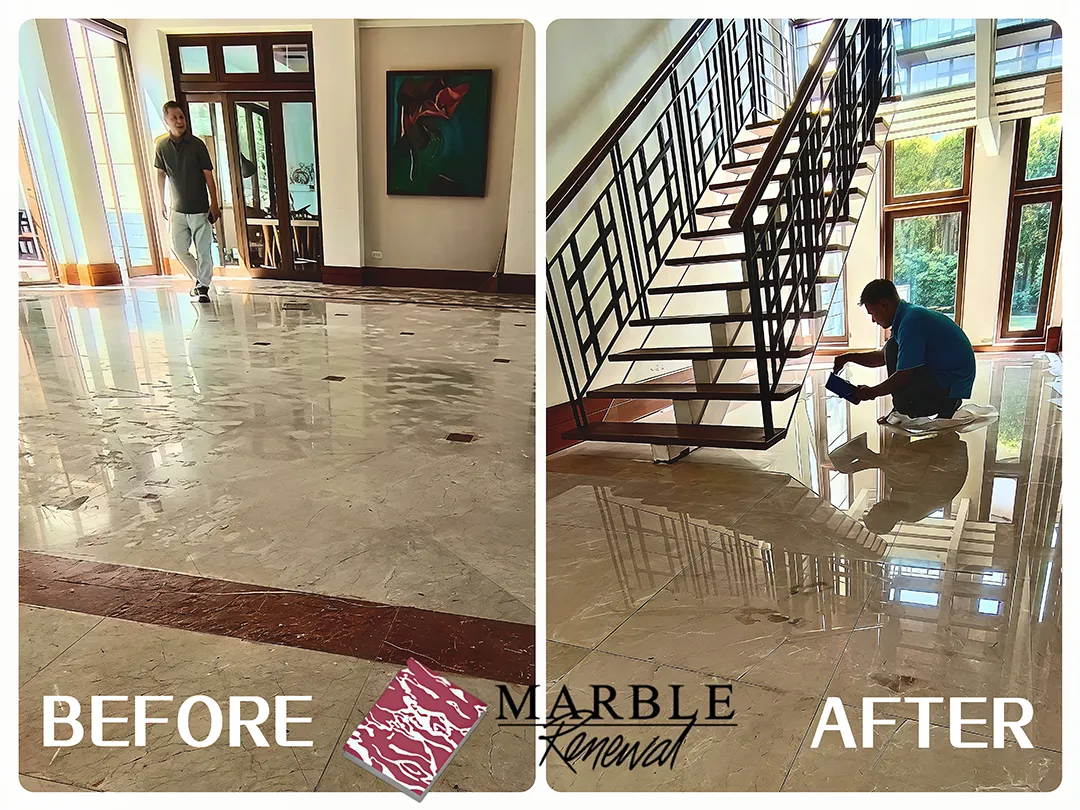
Before and after marble polishing for a residential property in Singapore, restoring clarity and reflection.
Condominiums & Apartments
Even smaller residential spaces can experience:
- loss of shine
- surface dullness
- uneven reflection
Polishing helps restore brightness and improve the overall appearance of the interior.
Why Professional Marble Polishing Matters
Marble is a natural material, and each surface behaves differently depending on:
- its composition
- usage conditions
- level of wear
Professional polishing ensures:
- proper assessment of the surface
- appropriate treatment stages
- consistent and natural-looking results
Conclusion
Marble polishing is an essential process for restoring both the appearance and durability of marble surfaces.
Whether in large commercial spaces such as hotel lobbies or residential environments like living rooms and staircases, a properly carried out polishing process can significantly improve surface clarity and finish.